Author: Gershon Ben Keren
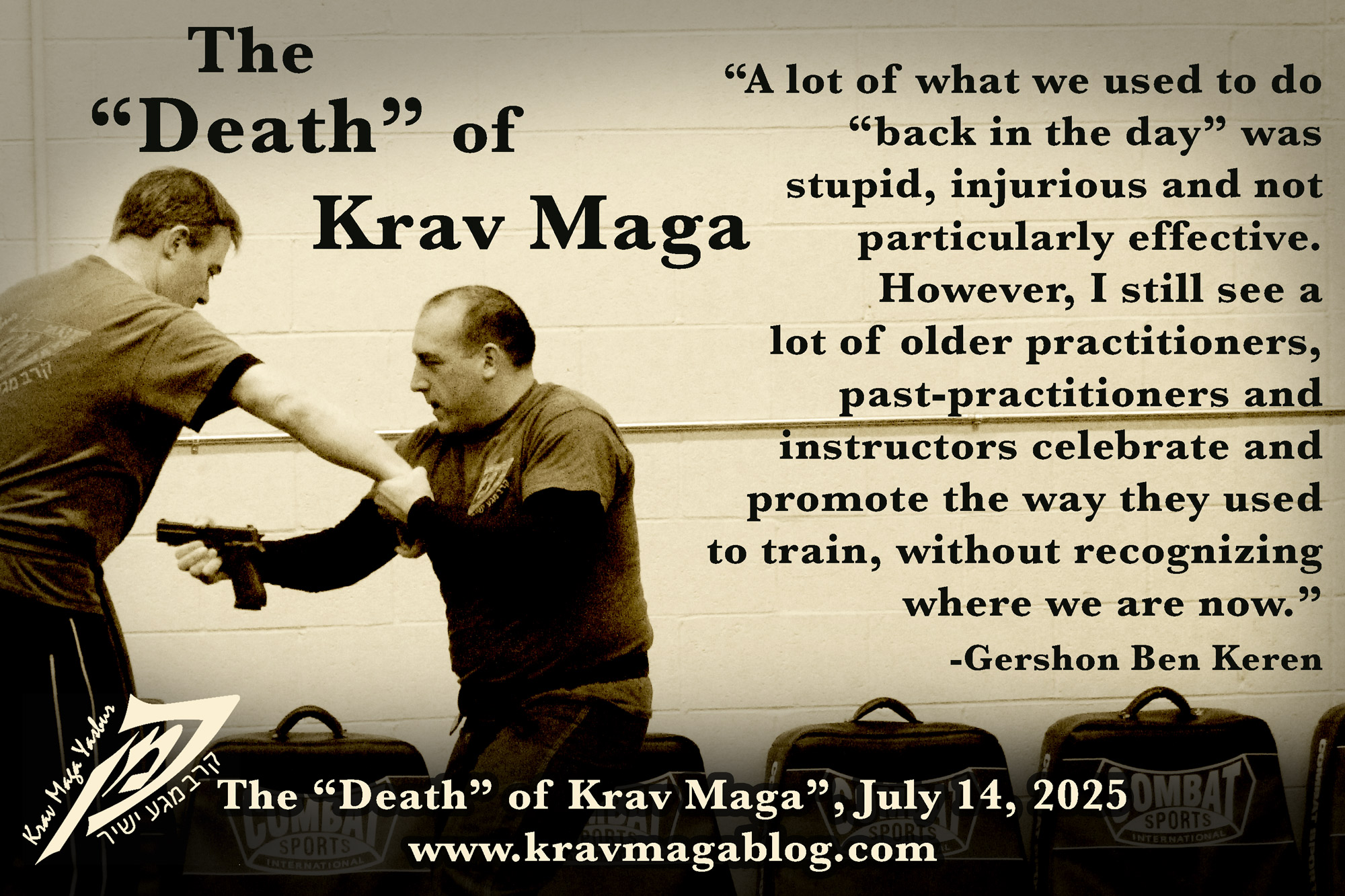
People create narratives, and rarely are they completely accurate. When I was a child, I was often told by teachers and other adults that I “didn’t know how good I had it”, with a following story about tin baths, working down coal mines, and only having lard spread on a piece of old leather to eat etc. These “hardships” were worn like a badge of honor that myself and those of my generation – at the time - were meant to celebrate. When I think about my childhood and how the world is now, I’m not nostalgic for the past but rather amazed by the present, and I want to live in it, and grow with it. When I was at university I had to do statistics manually, step-by-step, in order to get a result. Now I let the computer/machine do it. I’m not so interested in the process, I just want the result, and the “computer” does it far better than me. This is progress e.g., machine learning can run multiple linear regression tests, faster and better than I can. This is not to say that there aren’t lessons from the past, and that certain things may have been lost and/or their value discounted, however progress and where we are now should be celebrated, and this includes martial arts and self-defense training. A lot of what we used to do “back in the day” was stupid, injurious and not particularly effective. However, I still see a lot of older practitioners, past-practitioners and instructors celebrate and promote the way they used to train, without recognizing where we are now.
When I was a kid practicing Kyokushin Karate, a good third of the class consisted of a warm-up that involved a lot of static stretching. Modern day sports science has shown us that this type of stretching is good for developing flexibility, but does very little to warm-up the body for dynamic movements i.e., this type of stretching would be better done in a practitioners own time rather than in a class; there are faster, simpler and more productive ways to warm up, if that is the purpose of this part of a class. One very traditional martial art which has “modernized” its approach is Uechi-Ryu Karate. The style is famous for its physical conditioning which allows practitioners – at a higher level – to make finger strikes that burst cans of beer, and have baseball bats break off of their shins etc. I remember talking to a very high-ranking instructor who said – and bear in mind that this is a very traditional/old style of Karate – that it was only in the last twenty to thirty years that the system/style had developed its conditioning methods in a way that didn’t result in potential long-term injuries and health issues etc. There was no “nostalgia” for the old methods that they used to train in just a “celebration” that they had now gotten it right i.e., progress. This is the direction all training should go in; smarter rather than simply harder.
I recall a conversation with someone who told me that part of his boxing training involved being put through a set of physically exhausting exercises and then having to stand whilst others took shots/punches at his head to prepare him for a standing eight count – a standing eight count in boxing is a rule that allows the referee to pause the fight and give a fighter an eight-second count to recover - without the fighter having being knocked down. With what we now know about concussions, such a practice could have long-term mental-health/psychological risks etc. Whilst this guy wasn’t celebrating it – and recognized the risks such a training method had to it - I’m sure you can find someone who used to train this way lamenting the loss of this practice and proudly telling the younger generations how hard they used to train “back in the day”.
I started training in Krav Maga in 1993, over thirty years ago. At that time its training methods were modern compared to almost all other martial arts I’d trained in. Safety was a consideration, something that was a very “new” idea compared to the ways I’d previously trained, where performance was the goal at the expense of everything else; I remember one instructor sending me on a 3-mile run on a hot summer’s day, wrapped in bin-liners, and having to hold a cup full of water in my mouth as I did so, to teach me to breathe through my nose. I temporarily passed out somewhere around mile two. However, there are those who nostalgically look back to certain Krav Maga training methods during the 1990’s and argue that Krav Maga has gone “soft”, that it isn’t what it used to be etc., and that we should go back to the good old days and revise some of the potentially injurious training methods because that is the only way to build the correct/necessary character and mindset. Here there is a major problem, and one that stands squarely in the path of progress.
Training methods should evolve with science, and instructors should keep an eye on this, e.g. most injuries in any sport have been found to be due to fatigue. If as an instructor you are using fatigue to replicate the post-adrenal phase, understand that this heightens the risk of injury and so students should be monitored and when necessary controlled to avoid this. Also, different generations have different experiences and expectations of violence, as well as different ways of learning. Whilst my generation may have been taught that it was acceptable for someone in a leadership role/position to shout at them and use demeaning/humiliating language (remember your old 1970’s and/or 80’s physical-education teacher), that is not necessarily true of successive generations, and/or people who had to grow up/endure it. Krav Maga, like any activity, has to be accessible to those individuals you want to teach, and this means that how you present Krav Maga training is important. There will always be those who say that this shouldn’t be important but if the way you teach/train discourages and/or excludes people who would benefit from such training you may be “preserving” what you understand as the art at the expense of “promoting” it, which will eventually see it die. This is not about compromising values for commercial success but about presenting Krav Maga training in a way which is both effective and accessible, even if this means the “death” of Krav Maga as you once knew/first experienced it.