Author: Gershon Ben Keren
When I was a kid starting out in martial arts I was of a generation where kids were generally seen and not heard, adults were to – by default - be respected, and physical discipline of kids was largely acceptable etc. Whilst some adults today may have a certain nostalgia for parenting in the 1970’s and 1980’s, the messaging of kids should do what adults – especially those in positions of “power” such as teachers and religious leaders - tell them, allowed many predatory adults to get away with physical and sexual abuse, without the fear of those they victimized telling someone etc. This is not to say that there is no longer such abuse, as societies will always have such individuals, but rather such predators are more likely to have those they target inform on them; especially if they have supportive adults around them.
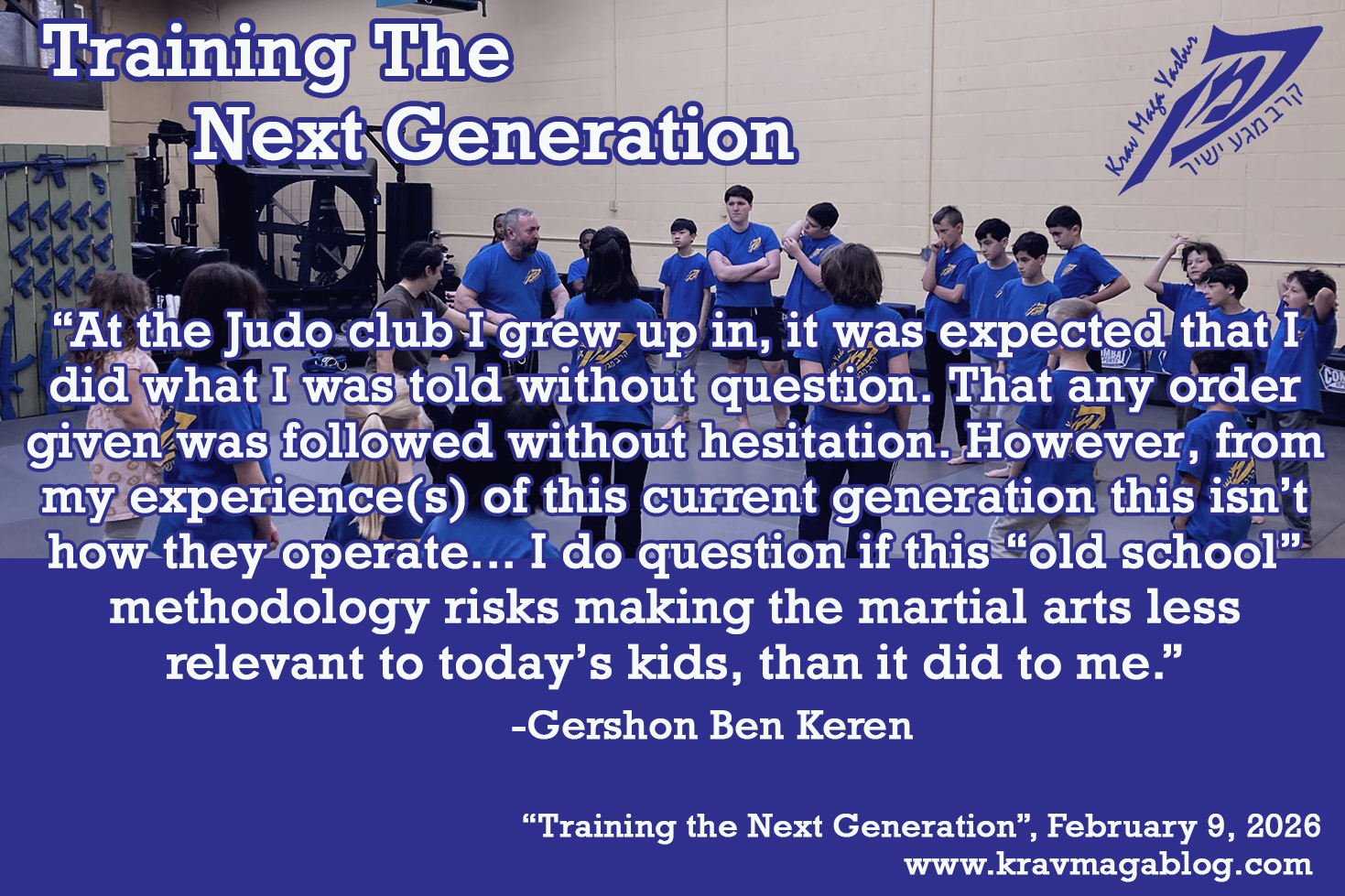
So, whilst there are times when I wish the younger generation would listen more and question less, I do think/believe allowing children and teens to have a voice is a societal progress. However, this wasn’t my “martial arts” experience. At the Judo club I grew up in, it was expected that I did what I was told without question. That any order given was followed without hesitation. However, from my experience(s) of this current generation this isn’t how they operate. There will be some martial arts/self-defense instructors who may argue – and they may be right – that this method of teaching and training is how “discipline” and “humility” etc., are developed and that those who fail to respond to such coaching and instruction lack a certain character, however I do question if this “old school” methodology risks making the martial arts less relevant to today’s kids, than it did to me. In this article I want to look at why Gen Z may see the martial arts as less important and applicable than they were to my generation, and whether training culture and methods may need to be updated without losing the integrity of the “art”.
My primary motivation for learning a martial art was due to being physically bullied, i.e., I wanted/needed to be able to defend myself and this is what martial arts training promised me. Whilst physical bullying still exists, it is much more likely to be both recognized and acted upon. When I was at school, during recess/break, teachers would huddle up together and turn a blind eye to physical “scuffles”, as they saw this time as much as a break for them as it was for the kids etc. This attitude of ignoring physical bullying, although still present in some quarters, is far less prevalent today for a variety of reasons. Also, with the advent of social media, the proliferation of mobile phones etc., kids have learnt that there are far better ways of torturing someone and causing them pain than physically harming them, plus they can do it more discretely, lessening the risk of being observed and caught. A simple word and set of emojis, about someone, that is sent to a text group, can cause that individual far more pain, distress and anxiety, than a punch or a slap, and is more likely to go unnoticed by the adults in their life who are acting as guardians. Whilst I believe that practicing a martial art does develop social resilience that is applicable to such bullying, I’m not sure that this generation would recognize the relevance of this to their experience(s).
I have written before about the research and studies by Judith Harris who is best known for her "group socialization theory," which she presented in her book The Nurture Assumption (1998). This theory challenged the then-traditional view of the time that parents were the primary influence on their childrens’ behavioral development. Harris argued that much of a child's behavior is shaped by their peer groups and the social environments in which they find themselves, rather than by parental socialization alone. Group socialization theory would also make the argument that any values learnt within a martial arts school – whilst being rewarded in that environment – would not necessarily be practiced in an environment/social group where a different, and possibly opposing, way of acting and behaving would be rewarded e.g., a child in a martial arts program may/will realize that if they say/shout “Yes Sensei!”, stand up straight, wait and take their turn etc., they will get a belt (a reward) and respect from their instructor etc., however if when they’re with their friends they earn acceptance and respect by setting trash cans on fire, throwing stones at cars, and swearing/shouting at passers-by etc., then this is how they will act/behave. This doesn’t mean that the traditional values taught in a kids’ martial arts class aren’t worth teaching etc., but rather that if they are at odds – in the way they are communicated – with the values of a child’s peer group they are unlikely to be adopted and exhibited in that context/situation.
I believe wholeheartedly in the genuine values that martial art teaches e.g., I learnt much about discipline and perseverance from attempting to master certain techniques/throws that I didn’t have a natural aptitude for, and responded well to chastisement about not putting in the necessary effort to do so; however I was a product of a generation that was used to being treated/encouraged this way, and I am far from sure that this is how the current generation is motivated. I also believe that there is a difference between values and methods, e.g., there is more than one way for individuals to develop respect, humility and discipline etc. Just because I and my generation responded well to a certain way of training, doesn’t mean that this generation does and will. It is easy and reassuring to believe that the martial arts will always be relevant to people, however as generations change the way this relevance - and how it is communicated - may need to be adapted from the way we practiced and were taught.