Author: Gershon Ben Keren
There is often a tendency in personal safety and self-defense circles to focus on the external rather than the internal e.g., that the behaviors and actions of others are the problem(s) that need to be dealt with rather than our own. We might never consider that we could be seen by others as a threat or a provocateur of aggression and violence. We might feel/believe that we have the right to get into someone’s face when they commit an injustice against us, but that others don’t have the same right when we commit – what they believe – to be an injustice committed against them etc. If we are truly to be an innocent party in a dispute/aggressive encounter, we need to be sure that we haven’t in some way reacted or responded in a way that may have caused someone to feel threatened and fear for their own safety etc. If you are someone who may have a tendency to blame external things for inconveniences and frustrations, when they are in fact your responsibility, you may be likely to over-react in/to a social interaction that is not following the script you expected/wanted it to; and before this sounds judgmental, everyone has been there at one point in time i.e., there are few people who haven’t blamed someone or something for a situation that is of their own making. This article looks at how we can prevent the relatively small frustrations in our lives becoming larger ones that potentially have serious consequences e.g., we may morally/righteously believe we have a right to act/respond physically but are actually judged the aggressor and end up suffering the legal consequences of our actions etc.
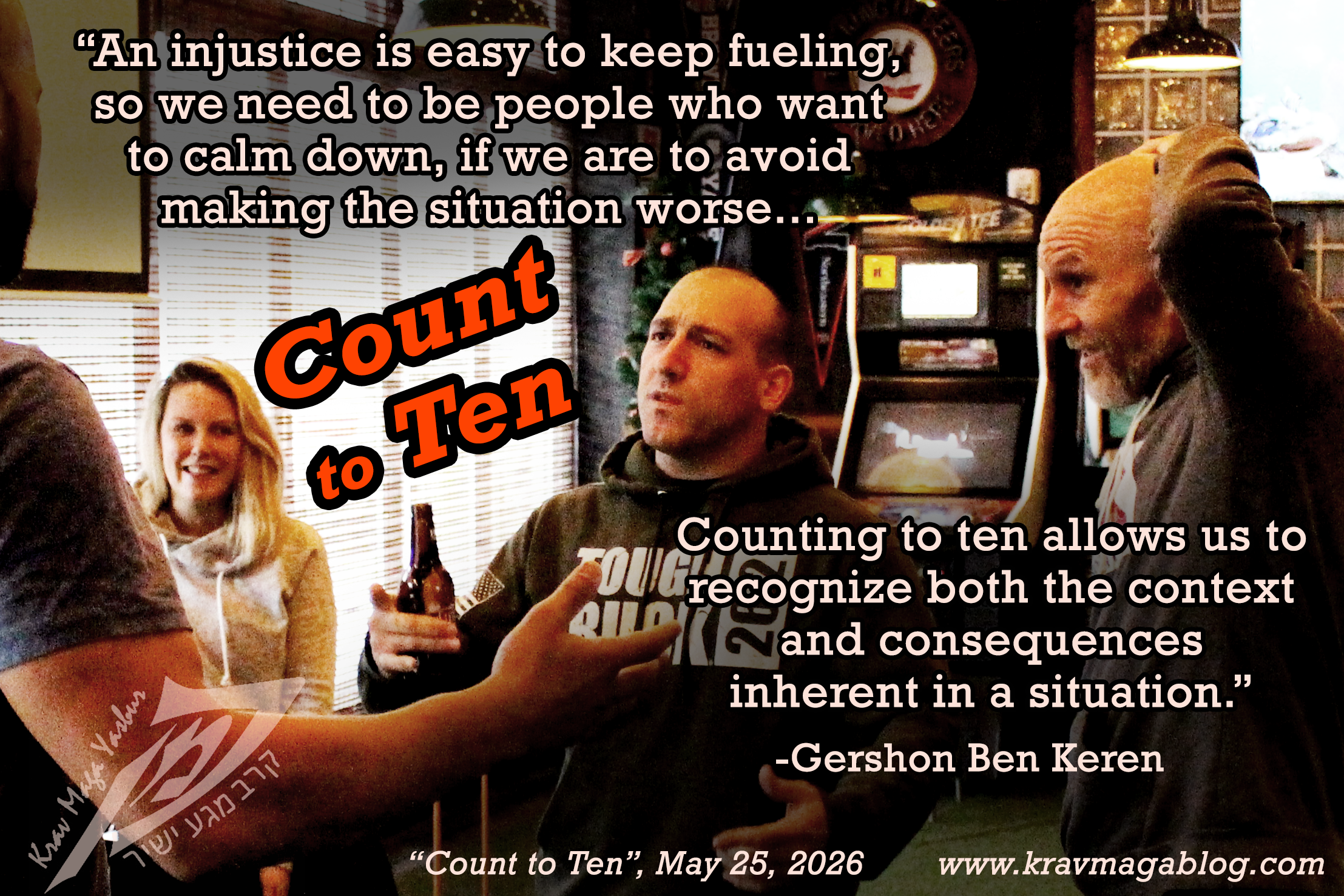
A large number of incidents involving law enforcement officers engaging in excessive use of force occur after foot chases. This is where a suspect is apprehended, caught in the act etc., flees, forcing an officer to pursue them on foot. In many cases, at some point, the suspect realizes that they’re not going to escape and/or they are making their overall situation worse by continuing to run, and so they stop in order to give themselves up. By the time the officer catches up they are adrenalized, exhausted and annoyed that the suspect didn’t respect and respond to their command(s) i.e., they are not in their best and most rational state; making this a moment when they may be inclined to use excessive force i.e., they are reacting in the moment. This is especially true if a department/jurisdiction doesn’t have foot patrol/chase policies, so the officer hasn’t been given guidance concerning the protocols and procedures that they should follow during such incidents. Sometimes, when a department starts to get a large number of complaints and legal suits against them, they realize that they have a training issue that needs to be dealt with and an external consultant/trainer is brought in to address this issue. Almost universally the advice given is the same advice we were given as children when our parents saw us get angry, and that is to count to ten before acting. This period of time is usually enough for us to move from an emotional state to a rational one, if we are willing, and this is perhaps the most important part; we need to want to calm down. An injustice is easy to keep fueling, so we need to be people who want to calm down, if we are to avoid making the situation worse.
Counting to ten allows us to recognize both the context and consequences inherent in a situation. One of the transitions I had to make by moving from the UK to the US involved driving. From what I understand about Massachusetts, where I live, the “style” of driving is some of the worst in the country. Whilst there are obviously bad/selfish drivers in the UK, on the whole driving is largely a cooperative endeavor e.g., if you’re entering on to a highway, people will pull over, or let you in, rather than actively prevent you from doing so (something I experience on a near daily basis in Massachusetts). Like anyone, when dealing with aggressive drivers my initial reaction is that of annoyance, frustration, injustice and wanting to demonstrate all of these things to the other party, however one of the things I consider is that of context i.e., this is a person I’m unlikely to ever see again, and they’re probably fully aware of their actions, so there’s little to be gained by responding to them by driving in an equally aggressive manner. As well as considering context when dealing with aggression, I also consider the potential consequences of any response/action. This is true in all situations. There is a tendency for people to believe that their “moral outrages” are legally protected. However, this is not the case. During my time working security, I have been “assaulted” (from a legal point of view), more times than I can remember, with aggressors not being aware that they were doing this. Whilst the legal definition of assault varies somewhat between jurisdictions, assault usually consists of two components:
1. Causing another person to fear immediate unlawful physical harm, and
2. Being in a position and proximity to immediately be able to do so.
If you are close enough to touch someone, and you give them reason to fear for their safety, then you may give up your claim of self-defense and hand it over to the other party. This may well mean that you could be facing criminal charges and potentially a civil case, i.e., there are potential consequences to your actions, and these can be long-term e.g., you get a criminal conviction, and you may well have a mark against you when dealing with future employers etc.
Counting to ten gives us the time to recognize the context, and consider the consequences of our actions, and it’s worth slowing and regulating our breathing as we do so. Very few of us are naturally “Zen” when we experience an injustice and/or frustration, and it is worth recognizing this. Before we can control a situation/interaction we must first control ourselves, and that means being able to respond in a calculated manner where we can justify our actions and behaviors from a number of perspectives.