Author: Gershon Ben Keren
At present there appears to be a public interest in the release of the “Epstein Files”. Whilst it is unclear how the information they contain is formatted and whether there is a proverbial “smoking gun”, with some believing that such will clearly/cleanly implicate political characters that they object to – both on the left and the right – it is unfortunate that this has been the focus, and a wider debate concerning human trafficking hasn’t been started i.e., people seem to be more concerned with exposing the villains, than understanding those who are victimized and how they came to be victimized etc. Whilst Jeffrey Epstein and Ghislaine Maxwell were “high profile” perpetrators they weren’t necessarily unusual or exceptional ones e.g., Maxwell acting as a “madam” to recruit young girls is something that is common to many sex-trafficking operations, and Epstein ran a “trafficking ecosystem” involving numerous people to maintain his network, similar to how many sex trafficking operations are organized in tiers with recruiters and facilitators, along with the traffickers themselves etc.
However, most traffickers do not have such actors who enjoy high-profile connections, which gave Epstein extraordinary power and protection within influential circles. It appears that it is this part which seems to be of most interest to the public, i.e., who were these high-ranking influential players that both enabled him and/or were directly involved in victimizing those he targeted. Without focusing too heavily on Epstein and Maxwell, I want to use this article to look at how human trafficking, whether for sex or work etc., occurs e.g., what is the psychological profile of those who engage in trafficking, who they target and how they operate, because - without being alarmist - those they target are “ordinary” people like us, our family members and our sons and daughters. Whilst the high-profile nature of the Epstein case may lead us to believe that because we don’t move in those circles, human trafficking shouldn’t and doesn’t concern us, we should understand that those who are trafficked can be our neighbors, friends, and people we know e.g., they can be the waiter/waitress who serves us at our favorite restaurant, or the people who come and clean our homes, landscape our yards, provide childcare for the friends of our kids etc., as well as those who are forced to be sex-workers.
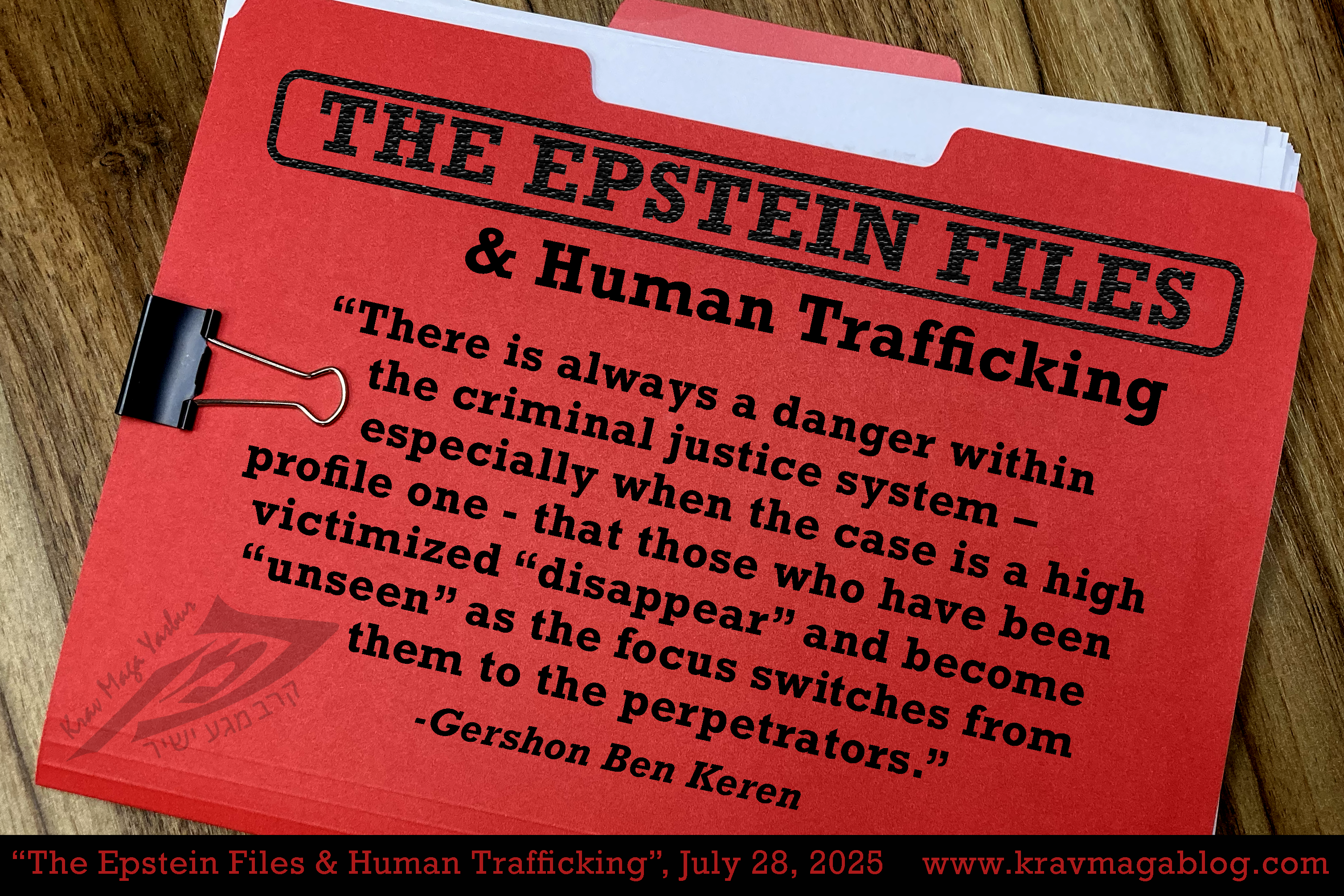
There is always a danger within the criminal justice system – especially when the case is a high profile one - that those who have been victimized “disappear” and become “unseen” as the focus switches from them to the perpetrators. It would be beneficial if the public interest in the “Epstein files” starts to shine a light on human trafficking as an offense that affects many e.g., the International Labor Organization (ILO) in 2024 reported that 28 million people are subjected to forced labor annually, whilst others (Zimmerman & Kiss, 2017) have estimated that there are on average, 40.3 million individuals that are trafficked annually.
When “interest” in human-trafficking began to increase in the 1990’s and early 2000’s it was originally thought that trafficking was largely in the domain of organized crime gangs. Although such gangs do engage in trafficking, research has revealed that many trafficking operations involve single perpetrators e.g., Small et al. (2008), in a US study found that 90% of federally prosecuted child sex trafficking cases involved a single perpetrator. It is important at this point to define what constitutes human trafficking. The Palermo Protocol (defined by the UN) basically, recognizes human trafficking as being the recruitment, transportation, harboring and/or acquisition of individuals through fraud, force and/or coercion for labor and/or commercial sexual exploitation. Whilst financial gain may appear to be the primary motive of traffickers, and this may have been part of Epstein’s motivation e.g., whilst he may not have “directly” charged associates, by providing sexual services to rich and influential associates he may have indirectly financially benefited from them etc., many traffickers exhibit many psychopathic and narcissistic traits, such as charm and a lack of empathy, seeing their victims as disposable commodities who exist merely for the perpetrators own gain and benefit etc. In some cases, sex traffickers have made the argument that those they victimized benefited from the experience as they learnt that everything in life, including their bodies, had a price, i.e., being trafficked was an education for them. A common trait of narcissism is for the individual to see themselves as both the hero and the victim at the same time e.g., it is unfair that they are being prosecuted and treated as a criminal whilst their “offense” was for the benefit of others etc.
One standard method that traffickers use is referred to as a “false front”. This involves promising those they target a “better life”. Ghislaine Maxwell used a "false front" to lure young women into Jeffrey Epstein’s sex trafficking network by promising them a better life through opportunities like modeling, financial support, and access to the elite social circles of wealthy and powerful individuals. Maxwell presented herself as someone who could provide access to the modeling world, arranging meetings with influential figures or even suggesting that these young women could make it “big” if they worked with Epstein. Once a level of trust was established, Maxwell and Epstein’s tactics shifted from offering support to gradually increasing the level of exploitation e.g. the initial promise of a better life would turn into an expectation of sexual favors, usually under the guise of being part of Epstein’s "business" or modeling work. At this point Maxwell would often position herself as a trusted confidante – adopting the role known as “Madam” – who then normalized the experience of sexual exploitation e.g., “everybody does this”, “this is how things work” etc. Performing the role of a senior, more experienced woman, those she victimized would start to believe that she was guiding and educating them as to how the world really works and operates, and how as a woman it should be navigated. This allowed her to present the idea that those victimized were complicit and willing participants in their abuse. This is one of the reasons why many victims of sexual abuse are confused and ashamed believing that their involvement in the abuse was a result of their own decisions rather than coercion.
Many traffickers, like Epstein and Maxwell, create Trauma-Coerced Bonds and Attachments (TCA) with those they victimize. There is a reason that Epstein would fly young woman out to his private island (Little Saint James) in the U.S. Virgin Islands. Whilst it afforded him, Maxwell and others privacy it also isolated the young woman he flew out there. They became solely/exclusively dependent on him. This isolation doesn’t just make victims dependent on their abusers for physical needs, such as food, water and shelter etc. It also makes them psychologically and emotionally dependent on them, which can result in an intense emotional attachment to those who are exploiting them. TCA relationships are often characterized by the use of intermittent rewards e.g., a young woman on Epstein’s Island may initially be ignored and excluded from social interactions and then be made the center of attention (rewarded). After that they may be isolated/excluded again, with the process being repeated. Each time the sense of isolation increases along with the desire to be included. However, at some point a price is exacted and demanded for this inclusion. Ghislaine Maxwell, as the “Madam”, may suggest a way to be included again, such as offering to give Epstein a massage, and then going along with whatever he may suggest etc. When there’s only one person who can get you off the island, bad things start to sound like good ideas. Many traffickers create these bonds through a mix of isolation and physical/emotional dependency e.g., they may move someone to an unknown city, tell them that where they are is dangerous, and that their only chance of survival is to trust and rely upon them.
Nothing that Jeffrey Epstein and Ghislaine Maxwell did was new, novel or exceptional. They just did it with money and wealth. In some ways they were less original and creative than traffickers who lacked their resources. What they do demonstrate is that these types of offenses occur at all levels of society. There is a danger in believing that because you belong to a certain socio-economic class, lead a safe lifestyle etc., that certain things will never happen to you – the unfortunate truth is that they can. Many of Epstein and Maxwell’s victims were teenagers or very young women, with limited life experience and little understanding of the potential dangers they might face. These young women were often more trusting and naive, which made them easier to manipulate by someone who appeared to offer them opportunities and access to powerful, influential figures. These are not characteristics that are restricted to one demographic or class but are common to many people.