Author: Gershon Ben Keren
Some of us might know a person who finds it hard to let go of an injustice, whether real or perceived, that was committed against them. In some cases, it may be a minor one and with others a more major one. However, whilst most people are able to move on even when the injustice was notable and significant, there are those who just can’t seem to move past it. Some people keep their fixation private, whilst others want everyone to know about it, and may look for any opportunity in a conversation to bring their perceived wrong up. Psychologically this is referred to as rumination, which involves repetitive and persistent thinking about distressing experiences, emotions, or grievances without moving toward an emotional resolution. Such individuals aren’t interested in problem-solving and rather than allowing emotions to fade away naturally over time, rumination keeps them psychologically active. A person may repeatedly revisit a confrontation, replay a perceived insult, imagine what another person “really meant,” and/or mentally engage in and rehearse revenge fantasies. This process can strengthen anger, resentment, and hostility whilst at the same time reducing emotional flexibility and rational perspective.
Rumination plays a significant role in many forms of violence, particularly violence driven by revenge, grievance, humiliation, and/or perceived injustice. In many cases, violence is not simply the result of immediate anger or impulsive loss of control (spontaneous acts of aggression/violence). In certain situations, violent acts are preceded by prolonged periods of repetitive negative thinking in which individuals continually replay insults, betrayals, humiliations, or perceived wrongs, in their minds. This repetitive thought process, or rumination, can gradually intensify emotions and increase the likelihood of retaliatory violence, motivated by revenge. This is where, rather than simply focus on their own “suffering”, they want the person who committed the injustice against them to suffer as well. Revenge itself is often rooted in feelings of humiliation, betrayal, disrespect, rejection, and/or loss of status. Individuals seeking revenge frequently believe, or convince themselves of a narrative, that they are restoring justice, dignity, and/or personal identity rather than simply causing harm to another person. Research suggests that revenge fantasies can temporarily create feelings of empowerment and control, particularly for individuals who feel emotionally powerless and/or socially humiliated.
One important concept connected to rumination is hostile attribution bias, which I wrote about last week. This refers to the tendency to interpret ambiguous behavior as intentionally hostile. A person prone to hostile attribution bias may assume that accidental slights, social exclusion, criticism, or disrespect are in fact deliberate attacks. Once this interpretation becomes fixed, rumination can repeatedly reinforce the perception of victimization and injustice which may over time lead the individual to become increasingly emotionally committed to retaliation. From a criminological perspective, rumination is particularly important because violence often emerges from social and emotional processes rather than purely rational calculation. Criminologist Jack Katz argued that many violent acts involve “moral dramas” in which offenders see themselves as responding to humiliation, disrespect, or a transgression. Violence can become framed by an individual as a way to restore pride, status, and/or emotional balance.
Whilst many people engage in rumination, few exact acts of violence against those who they believe are guilty of a transgression. Their acts of revenge are often social rather than physical e.g., letting everyone know who it was that committed the injustice against them, in order to sully their reputation and/or have friends abandon them etc. However, there are certain types of violence where rumination and revenge lead to violent offending. One of these is gang violence. In many gang environments, reputation and respect are central to survival and social standing. If a gang member is assaulted, insulted, or publicly humiliated by a rival, the emotional impact will often extend beyond the immediate incident. The event may be replayed repeatedly within both the individual and the wider group. Rumination may occur collectively as well as individually, with repeated discussions of the disrespect reinforcing anger and a perceived need for retaliation. In these situations, revenge becomes socially validated. Failing to retaliate may be viewed as weakness which potentially could invite and lead to further victimization. This dynamic can contribute to cycles of retaliatory violence where each act becomes the justification for another.
Rumination is often a contributing factor in acts of extreme violence such as active shooter/killer incidents. In several cases, offenders have been known to spend months or years obsessively focusing on perceived rejections, humiliations, bullying incidents, and other injustices. This can be seen in their writings, online posts, or journals often revealing repetitive grievance-focused thinking combined with fantasies of revenge and a restoration of status (even after they have killed themselves if they are a suicide shooter/killer). Psychologically, the offender gradually constructs a narrative in which violence becomes morally justified and/or emotionally necessary. One example of this is the 2014 Isla Vista killings committed by Elliot Rodger, who although they didn’t restore his loss of status in the general public it elevated him to a hero within the Incel community. Rodger’s writings and videos demonstrated prolonged rumination concerning rejection, resentment, humiliation, and perceived social injustices. He repeatedly focused on feelings of exclusion and unfairness while fantasizing about revenge against individuals he blamed for his emotional suffering. His case illustrates how rumination, narcissistic injury, grievance collection, and revenge fantasies can combine over time into violent ideation.
However, rumination isn’t just limited to extreme violence, it can also play a role intimate partner violence, workplace violence, and stalking etc. In domestic abuse situations where acts of intimate partner violence are committed, an individual may repeatedly focus on perceived betrayals, disrespect, and/or a fear of abandonment. This repetitive thinking can intensify jealousy, anger, and possessiveness. In stalking cases, offenders often engage in persistent rumination about rejection and perceived injustices following the end of a relationship. Their thinking may become increasingly obsessive, emotionally charged, and resistant to alternative interpretations. When alcohol and substance abuse are added in it can further increase the danger associated with rumination and revenge. Intoxication often reduces emotional regulation and impulse control whilst narrowing attention onto emotionally provocative thoughts. A person already engaged in grievance rumination may become more likely to act aggressively when intoxicated because inhibitions and long-term consequences become less psychologically important.
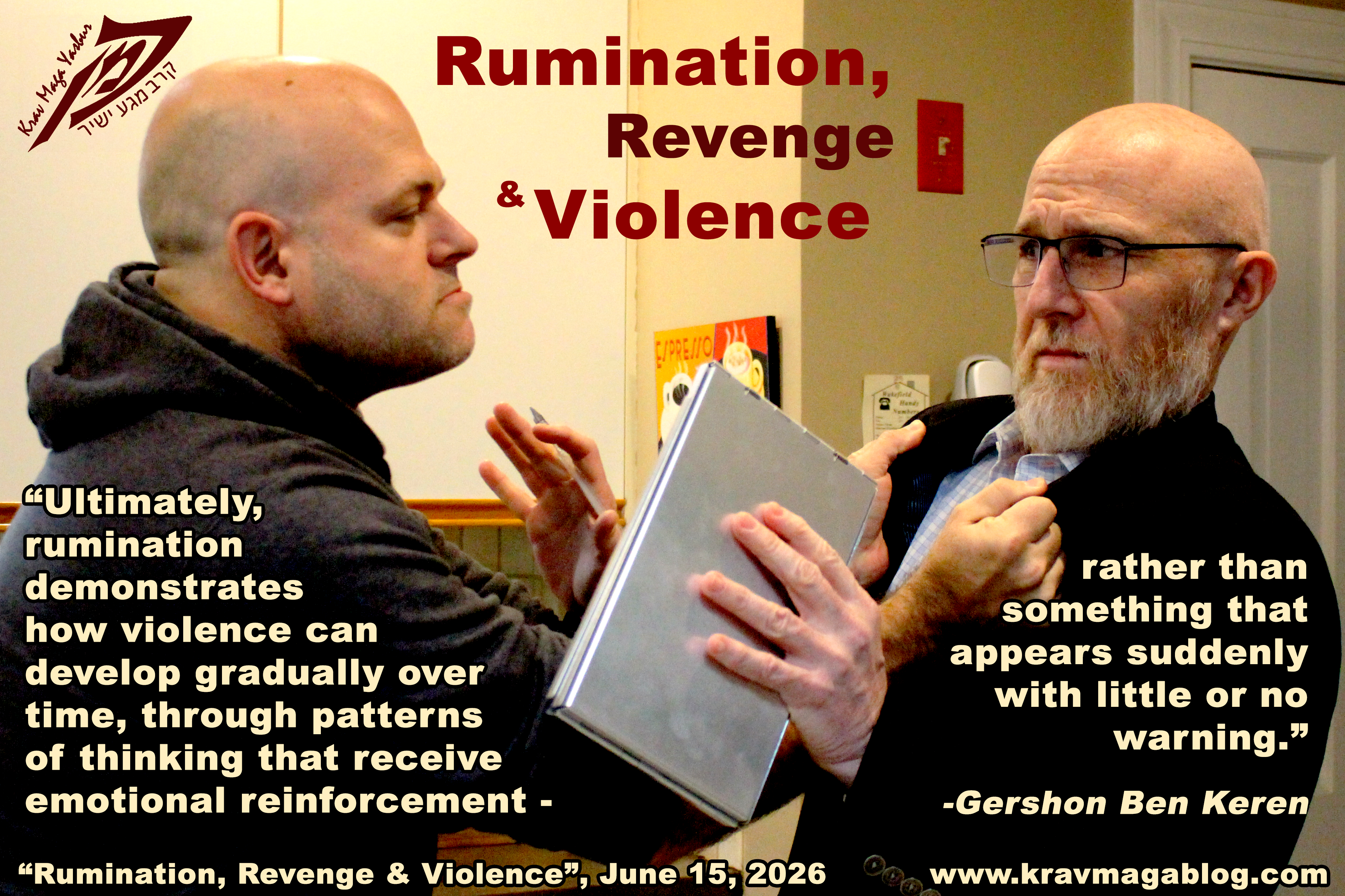
It is important to note that not everyone who ruminates engages in violent offending. Many individuals experience repetitive negative thinking without engaging in any criminal behaviors. Violence usually emerges when rumination combines with additional risk factors such as emotional dysregulation, access to targets, social reinforcements of aggression, substance abuse, and/or cultural norms that support retaliation. It is often useful to view violence as the product of interacting psychological, social, and situational influences rather than the result of a single cause. Ultimately, rumination demonstrates how violence can develop gradually over time, through patterns of thinking that receive emotional reinforcement - rather than something that appears suddenly with little or no warning. Many acts of violence motivated by revenge are psychologically built over time through repetitive thinking, emotional rehearsal, and the growing belief that retaliation is justified, necessary, and/or morally required.